











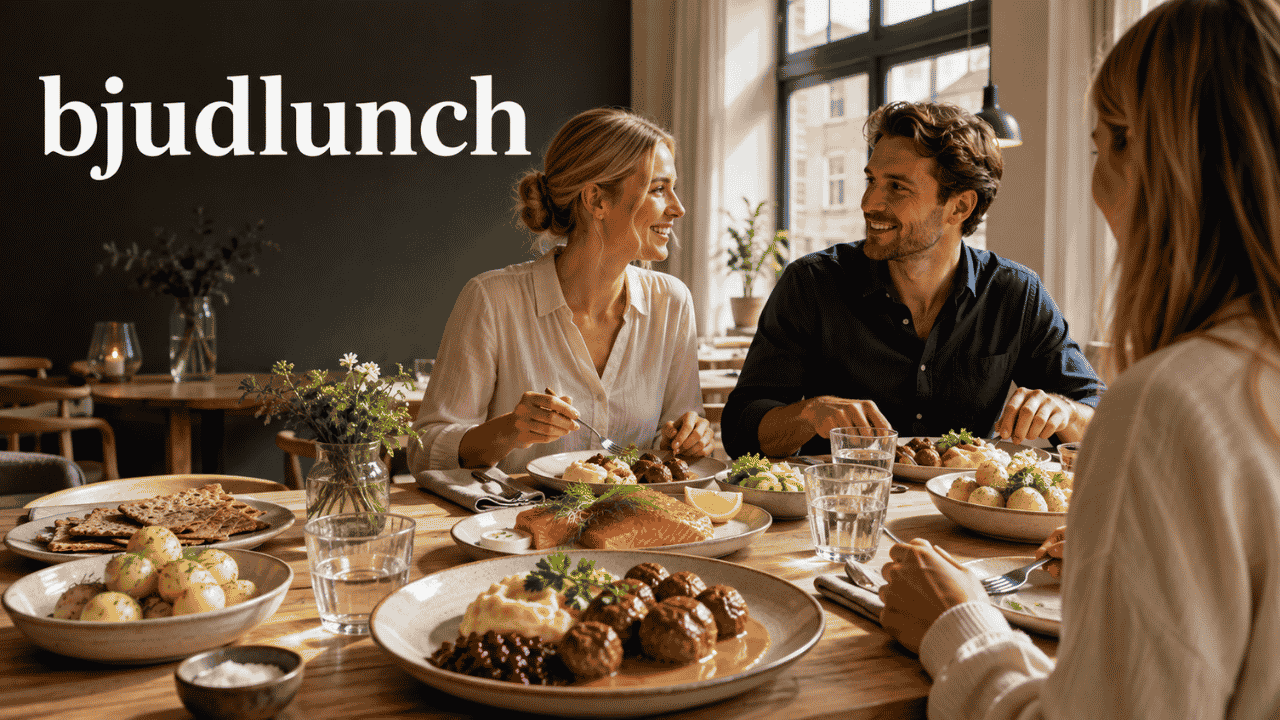
A bjudlunch is a Swedish way of inviting someone to lunch while taking responsibility for the meal. The word combines “bjuda,” which means to invite, offer, or treat someone, with “lunch.” In everyday use, it can describe a casual meal between friends, a thank-you lunch with a colleague, or a more structured business lunch. The idea is simple, but the custom says something about Swedish social habits: generosity does not have to be extravagant to be meaningful.
What Does Bjudlunch Mean?
The easiest way to understand bjudlunch is to think of it as “lunch is my treat.” When someone says “Jag bjuder dig på lunch,” they are offering to pay for the other person’s meal rather than simply suggesting that they eat together. The Swedish verb “bjuda” can be used when someone pays for a meal, buys a present, or offers something to another person. This makes the expression more about the act of giving than the particular food being served.
The meaning can change slightly depending on the situation. Between friends, a bjudlunch may be a way to catch up or say thank you after receiving help. At work, it can be connected to a project, a client meeting, networking, or a simple gesture of appreciation. The person extending the invitation normally makes it clear that they are paying, so there is less uncertainty when the bill arrives. This straightforward approach fits well with the practical nature often associated with Swedish lunch culture.
How Bjudlunch Fits Into Swedish Culture
Food is often a convenient way to bring people together without turning the meeting into a formal event. A bjudlunch can create space for conversation while keeping the occasion relatively relaxed. In a social setting, the purpose may be nothing more than spending time together, while in a professional setting the meal can help establish or maintain a relationship. The value of the invitation is therefore not only the food but also the time spent together.
Swedish business lunches tend to be practical and relatively focused. Lunch meetings commonly take place around the middle of the day, and punctuality matters because people often have work commitments before and after the meal. Conversations can begin with neutral subjects before moving toward the main business topic. Direct, clear communication and a modest approach are often more suitable than an aggressive sales pitch.
A bjudlunch can also work as a thank-you gesture. Someone might invite a colleague after completing an important project or invite a friend who helped during a difficult period. The gesture does not need to be expensive to have meaning. In fact, an overly elaborate lunch can sometimes make a simple thank-you feel more formal than intended. The strongest part of the tradition is the invitation itself and the opportunity to spend time together.
Traditional Food Ideas for a Bjudlunch
There is no single dish that defines a bjudlunch. The meal can be anything from a simple sandwich and coffee to a traditional Swedish lunch with several components. However, Swedish home-style cooking provides plenty of dishes that work naturally for this type of meal. Potatoes, fish, root vegetables, bread, sauces, salads, and seasonal ingredients can all form part of a comfortable lunch.
Traditional Swedish choices can include dishes such as:
- Swedish meatballs with potatoes and lingonberry
- Gravad salmon with dill sauce
- Pickled herring with potatoes and crispbread
- Pea soup served with pancakes
- Potato pancakes with suitable toppings
- Beef or vegetable stews
- Baked salmon with potatoes and seasonal vegetables
- Vegetarian meatballs with traditional sides
- Root vegetable soup with fresh bread
- Open sandwiches with fish, cheese, or vegetables
The best menu depends on who is attending and where the lunch is being held. A home-hosted bjudlunch gives the host more control over ingredients and preparation, while a restaurant makes the occasion easier when several guests have different preferences. Asking about allergies or dietary restrictions before choosing the menu is a small step that can prevent problems later. It also makes the invitation feel more thoughtful.
Bjudlunch Menu Ideas for Different Guests
A meat-based menu can remain very traditional without becoming complicated. Swedish meatballs, mashed or boiled potatoes, gravy, lingonberry jam, and a fresh salad create a familiar combination that works well for a relaxed lunch. Another option is a simple beef stew served with potatoes and bread. These dishes are especially practical when the host wants to prepare some of the food before guests arrive.
Fish is another strong choice for a Swedish-inspired lunch. Salmon can be baked or pan-fried and served with dill, lemon, potatoes, and vegetables. Gravad lax provides a lighter alternative and can be served with bread or a suitable sauce. Fish dishes can also be useful when the host wants a meal that feels special without requiring a complicated multi-course menu.
Vegetarian guests can be included just as easily. Pea soup, root vegetable soup, vegetarian meatballs, lentil stew, mushroom dishes, and vegetable gratins can all provide substantial lunch options. A host should check whether guests are vegetarian, vegan, or avoiding particular ingredients because these terms do not always mean the same thing. Offering one well-planned plant-based main course is usually better than adding a last-minute side dish.
Bjudlunch Etiquette: Who Pays?
One of the clearest parts of a bjudlunch is the payment. When the invitation genuinely means that the host is treating the guest, the person who invited the other person normally pays the bill. In Swedish business lunch etiquette, splitting the bill is described as uncommon when one person has clearly extended the invitation. This removes much of the awkwardness that can happen when guests are unsure whether the meal is being shared financially.
Guests should still behave naturally rather than ordering the most expensive option simply because someone else is paying. The host can make the situation easier by choosing the restaurant or explaining the plan when making the invitation. A simple phrase such as “Lunch is on me” communicates the arrangement clearly. At the end of the meal, a sincere thank-you is normally enough.
How to Behave at a Business Bjudlunch
Business situations require a little more planning than a casual lunch with a friend. Arriving on time is important because Swedish professional culture places considerable value on punctuality. Business lunch conversations can begin with light subjects before moving toward the reason for the meeting. The discussion should stay focused without turning the entire meal into an aggressive sales presentation.
A few practical rules can make the meeting easier:
- Arrive at the agreed time.
- Keep the opening conversation relaxed.
- Move naturally to the main business subject.
- Listen instead of dominating the discussion.
- Avoid exaggerated claims or aggressive selling.
- Respect pauses instead of trying to fill every silence.
- Keep the meal within a reasonable time.
- Thank the person who arranged the lunch.
Alcohol is not necessary for a successful business lunch. Swedish business-lunch guidance notes that many lunches are alcohol-free, while a light beer or wine may be acceptable when appropriate. Workplace policies and the nature of the professional relationship should always be considered before alcohol is included.
How Much Does a Bjudlunch Cost?
The cost depends heavily on the location and restaurant. Current Stockholm lunch data published in August 2026 puts the median restaurant lunch at around 160 SEK per person, with a common range of approximately 155–179 SEK among the restaurants included in the survey. Cheaper options can start below that level, while premium restaurants can cost considerably more. This means a host does not necessarily need a large budget to arrange a good lunch.
A rough planning guide can look like this:
- Budget café or simple lunch: around 90–130 SEK per person
- Mid-range restaurant: around 130–180 SEK per person
- Higher-end restaurant: 200 SEK or more per person
- Home-cooked lunch: potentially much less per person
For a group of four people, even a mid-range restaurant lunch can be planned fairly easily by multiplying the expected cost per person by the number of guests. Cooking at home can reduce the cost further, especially when dishes such as soup, stew, potatoes, or casseroles are prepared in larger quantities. The important thing is to choose a meal that matches the purpose of the invitation rather than spending money simply to make the occasion appear impressive.
How to Plan a Bjudlunch
Planning a bjudlunch does not need to become a large event. Start by deciding why you want to invite the person and what kind of setting suits the relationship. A casual lunch with a friend can take place at home or at a café, while a client meeting may be more suitable for a quiet restaurant. After that, choose a date, confirm the time, check dietary requirements, and decide who will handle the booking.
A simple planning process includes:
- Decide who you want to invite.
- Choose the purpose of the lunch.
- Select a suitable date and time.
- Pick a restaurant, café, office, or home setting.
- Ask about allergies and dietary preferences.
- Estimate the cost before confirming the arrangement.
- Send the invitation.
- Confirm the booking if necessary.
- Arrive early enough to handle practical details.
- Pay the bill and thank the guests for coming.
Keeping the process simple is often the best approach. A lunch invitation should feel like an invitation, not an event-management project. The host’s preparation should make the meal easier for everyone rather than making guests feel that they have to follow complicated rules.
How to Write a Bjudlunch Invitation
A good invitation should tell the guest the basic information without unnecessary wording. Include the date, time, location, and reason for the invitation when there is one. If you are paying, saying so clearly avoids confusion. For a business lunch, it can also help to mention the general purpose of the meeting so the guest knows what to expect.
For example, a simple invitation could say that you would like to meet for lunch on Friday at 12:00 and that lunch is your treat. A more formal invitation could explain that the lunch is being offered as a thank-you for a completed project or successful collaboration. The wording should match the relationship between the people involved. A message to a close friend does not need the same tone as an invitation to a client.
Bjudlunch in Business and Networking
A business bjudlunch can be useful when the goal is to develop a professional relationship rather than simply exchange information. Sitting down for a meal gives both people more time for conversation than a short phone call. It can be especially useful after completing a project, when meeting a potential partner, or when maintaining an existing client relationship. The lunch should still have a clear reason, even if the atmosphere remains informal.
The host should avoid making the meal feel like a hidden sales tactic. If the invitation has a professional purpose, being transparent about that purpose is better than pretending there is no business discussion planned. Swedish business etiquette favors clarity and modesty, while unnecessary pressure can work against the relationship. A successful bjudlunch should leave both people feeling that the conversation was worthwhile.
Tax and Professional Considerations
Personal and professional lunches can have different tax implications in Sweden. The Swedish Tax Agency states that a meal received from someone who has no connection to the recipient’s employer and is provided without a requirement for something in return is not treated as a taxable meal benefit. Employer-provided meals can be treated differently, and business representation has its own rules. Anyone arranging company-paid lunches should therefore check the current Swedish tax rules rather than assuming that every free meal is treated in the same way.
Professional invitations can also raise ethical questions when public officials or employees are involved. Some Swedish public-sector guidance says employees should decline meals from outside parties unless the meal has a natural connection to their duties, is modest, and does not happen too frequently. This is particularly relevant when a lunch could influence a business decision or create the appearance of an obligation. A normal social lunch and repeated high-value invitations should not automatically be treated as the same situation.
Why Bjudlunch Still Matters
The appeal of a bjudlunch is that it combines generosity with an ordinary part of daily life. The host does not need to organize an expensive dinner or elaborate event to show appreciation. A simple meal can create time for conversation, strengthen a friendship, thank a colleague, or open a professional discussion. That simplicity helps explain why the idea remains useful in both social and business settings.
The concept has also been used in marketing. Swedish businesses have promoted free lunches as a way to attract attention, encourage people to visit a location, or create an opportunity to meet potential customers. Historical examples include campaigns offering large numbers of free lunches, while businesses have also used lunch invitations as an incentive for prospective clients to meet them.
Conclusion
Bjudlunch is more than simply someone paying for another person’s meal. It is a Swedish expression of hospitality that can be used between friends, colleagues, clients, and business contacts. The meal itself can be simple or elaborate, but the basic idea remains the same: one person extends an invitation and takes responsibility for the cost. Understanding the etiquette makes the experience easier, especially when the lunch takes place in a professional setting.
A successful bjudlunch does not require an expensive restaurant or complicated menu. A thoughtful invitation, suitable food, punctuality, clear communication, and a genuine reason for meeting are enough to create a good experience. Whether it is a traditional Swedish lunch at home, a café meal with a friend, or a business meeting over lunch, the strongest part of the tradition is the time people choose to share.
Frequently Asked Questions About Bjudlunch
1. What is a bjudlunch?
Bjudlunch is a Swedish expression for an invited lunch where one person treats the other person to the meal. The word comes from “bjuda,” which can mean to invite, offer, or pay for something for another person. It can be used in both social and professional situations.
2. Who pays for a bjudlunch?
The person who makes the invitation normally pays when the invitation clearly means that lunch is their treat. In Swedish business lunch etiquette, splitting the bill is considered uncommon when one person has invited the other.
3. What food is suitable for a bjudlunch?
There is no fixed bjudlunch menu. Swedish meatballs, salmon, pea soup, potatoes, open sandwiches, salads, vegetarian meatballs, and root vegetable dishes can all work well. The menu should mainly reflect the guests, setting, budget, and dietary requirements.
4. Is bjudlunch only used for business?
No. A bjudlunch can be completely social and may be arranged between friends or family members. It can also be used for business meetings, networking, client relationships, workplace appreciation, or as a thank-you after completing a project.
5. How much should a bjudlunch cost?
There is no fixed amount that a host must spend. Current Stockholm data from August 2026 places the median restaurant lunch at about 160 SEK per person, while cheaper and more expensive options are available. A home-cooked lunch can cost considerably less, so the budget should match the occasion rather than the word itself.